
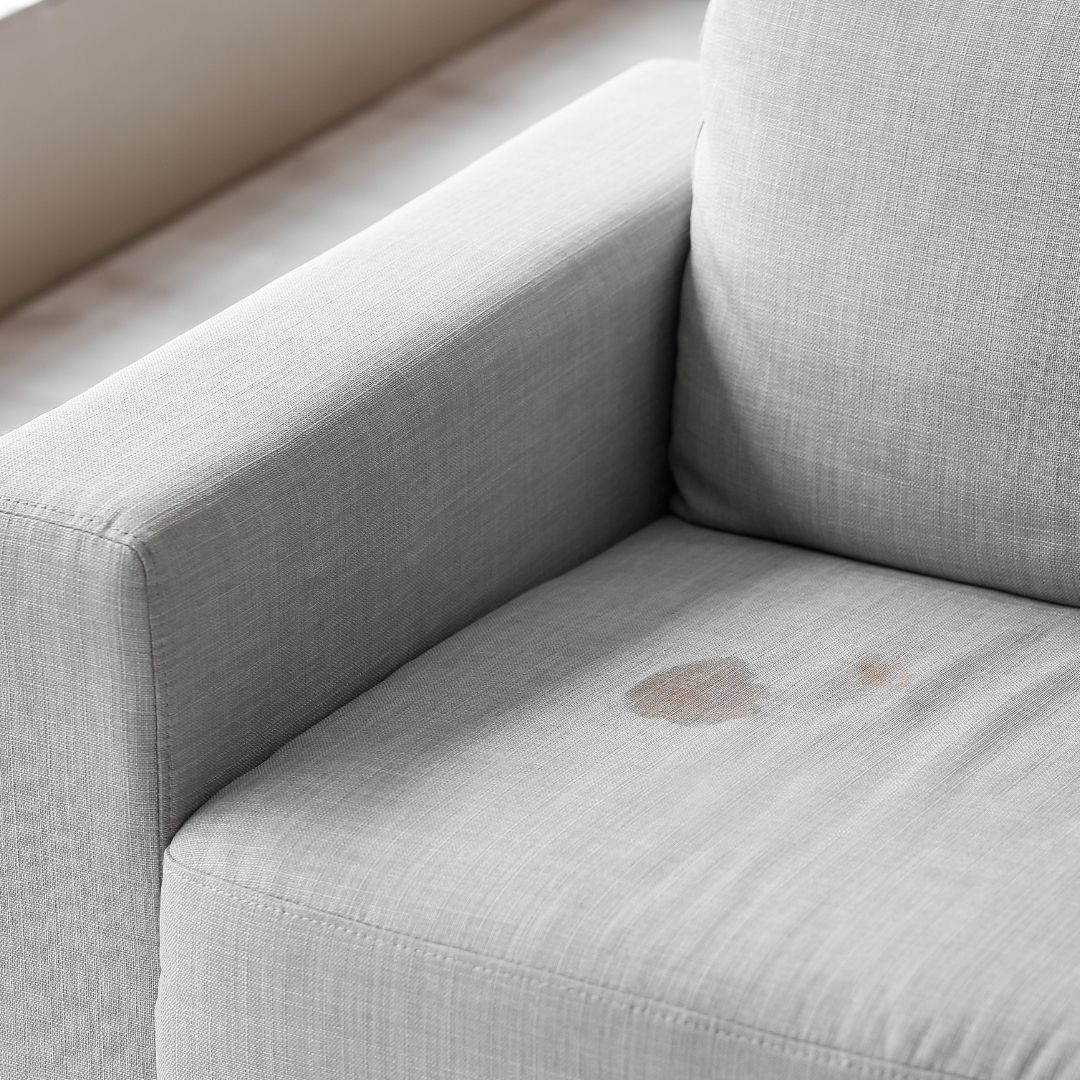
This is for anyone in Sydney looking at the little fabric tag tucked under their lounge cushion, wondering what the letter on it means before they grab a cloth and start scrubbing. At Wundaguard we get asked about it most weeks, usually after someone has tried to clean a mark and made it worse.
That one letter tells you exactly what you can safely put on the fabric, and getting it wrong is how a small spot turns into a permanent ring.
Short answer: The letter is the manufacturer’s cleaning code. W means water-based cleaners are safe, S means solvent only (no water), W-S means either is fine, and X means vacuum only, no water, no solvent, professional cleaning only.
On an S or X fabric, plain water alone can leave a watermark that won’t come out.
Here’s what each code means and why the S and X tags are the ones to be careful with.
Where to Find the Cleaning Code
Short answer: Check the underside of a seat cushion, the back of the lounge, or the tag sewn into a seam near the base.
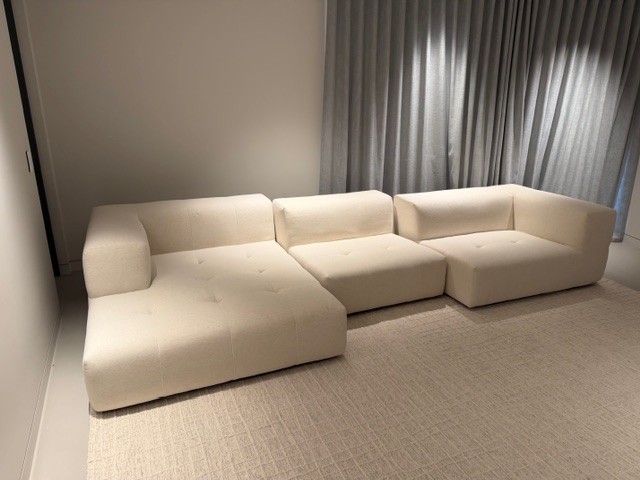
Most lounges sold in Australia carry a small white care tag with a single code letter on it. Lift a seat cushion and look at the underside first, that’s the most common spot. If it’s not there, check the inside of the cushion zip, the back panel, or down near the frame. If you genuinely can’t find a tag, treat the fabric as an S or X (the cautious option) until you know what it is.
What Each Cleaning Code Means
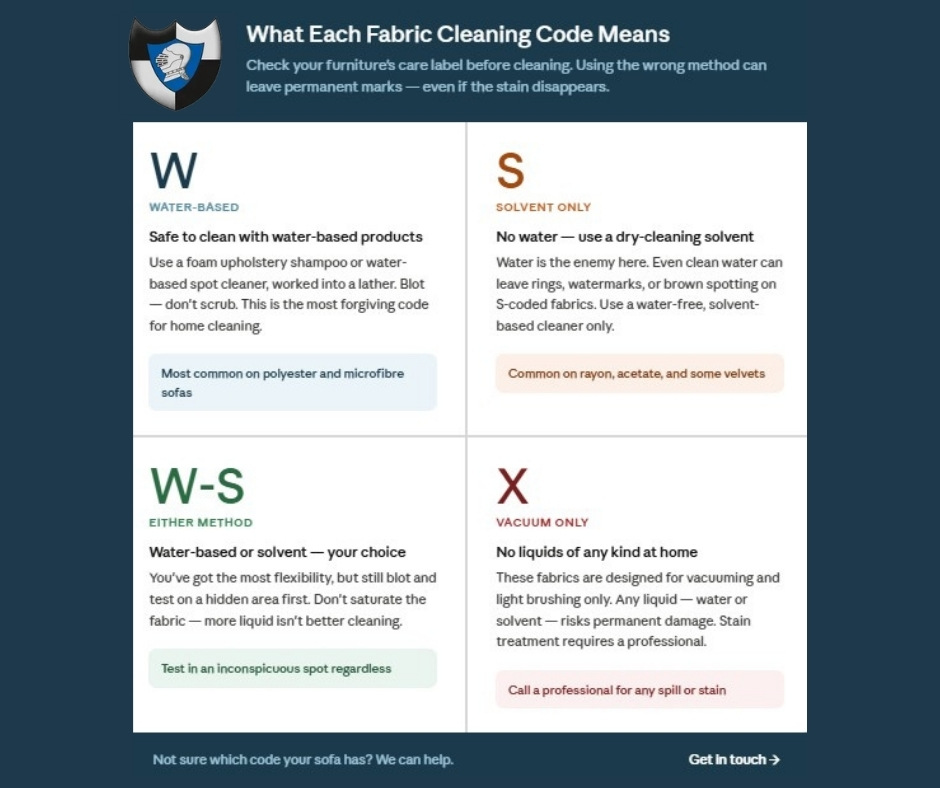
Short answer: W = water-based, S = solvent only, W-S = either, X = vacuum only.
- W (water-based): You can clean it with a water-based product, a foam or upholstery shampoo worked up into a lather. This is the most forgiving code for careful spot cleaning at home.
- S (solvent only): Use a water-free, solvent-based (dry) cleaner only. Water is the enemy here, it can leave rings, watermarks and brown spotting on these fabrics, even when the mark itself is gone.
- W-S (or S-W): Either a water-based or a solvent-based cleaner can be used. You’ve got the most options, but you still need to blot and test rather than soak.
- X (vacuum only): No water, no solvent. These fabrics are only meant to be vacuumed or lightly brushed at home. Any liquid cleaning needs to be done professionally, full stop.
Why the S and X Codes Catch People Out
Short answer: Most people reach for water and a cloth by instinct, and on an S or X fabric that’s exactly what causes the permanent mark.
When something gets spilt, the natural reaction is a damp cloth. On a W fabric you’ll usually get away with it. On an S or X fabric, the water itself is the problem, it carries dye and old residue to the edge of the wet patch and dries as a ring, or it reacts with the fibre and leaves a brown halo. We see this most on velvets, linens, viscose blends and a lot of the designer fabrics on newer lounges, which are far more likely to be coded S or X than the hard-wearing fabrics of twenty years ago.
It’s the same trap we wrote about in why DIY spot cleaning often makes stains worse, the fix does more damage than the original spill.
What to Do Before You Clean Anything
Short answer: Read the code, blot don’t rub, and test any product on a hidden spot first.
Step 1 Find the tag and read the code. If it’s S or X, don’t put water on it.
Step 2 Blot the spill straight away with a clean, dry, light-coloured cloth. Press, lift, repeat. Never rub, rubbing pushes the spill into the weave and can flatten the pile.
Step 3 If the code allows a cleaner, test it first on a hidden patch (the back corner, or under a cushion) and wait for it to dry before going near the visible area.
Step 4 If the mark doesn’t lift with gentle blotting, stop. The next attempt is usually the one that sets the stain. This is the point to call a professional.
If you’re not sure whether your lounge should be cleaned with water or solvent, our explainer on whether sofas should be steam cleaned or dry cleaned walks through how we decide on each fabric.
When to Call a Professional
Short answer: Any S or X fabric, any set-in stain, and any delicate fabric like velvet or linen should go to a professional rather than risk a permanent mark.
This is the part of the job we’ve been doing since 1983. An X-coded lounge can’t be wet-cleaned at home at all, and an S-coded one needs the right solvent and method, not a supermarket spray. We use the cleaning method that matches the code and the fibre, test before we treat, and control the moisture so the fabric dries evenly without rings.
It’s also why several major furniture retailers, including Freedom, Lounges Plus and Strictly Comfort, send their customers to us for post-delivery marks and ongoing care, and trust us to clean and protect their showroom floor stock. If a delicate fabric is worth getting right for a showroom, it’s worth getting right in your living room. You can see the full range on our furniture cleaning page, and our fabric protection starts from $44 per seat.
Frequently Asked Questions
What does the S tag on my couch mean?
S means solvent only. The fabric should be cleaned with a water-free, solvent-based (dry) product, not water. Water on an S-coded fabric can leave rings, watermarks or brown spotting even after the original stain is gone. For anything more than a light, tested spot clean, an S fabric is best handled professionally.
Can I use water on an X-coded lounge?
No. An X code means vacuum only, no water and no solvent at home. These fabrics are designed to be vacuumed or lightly brushed, and any liquid cleaning needs to be done by a professional with the right low-moisture method. Putting water on an X fabric is one of the most common ways a good lounge gets permanently marked.
What’s the difference between W and W-S cleaning codes?
W means you can only use water-based cleaners. W-S (sometimes written S-W) means either a water-based or a solvent-based cleaner is safe. W-S gives you more options, but you should still blot rather than soak and test any product on a hidden area first.
My lounge doesn’t have a cleaning tag, what should I do?
If you can’t find a code on the cushions, seams or back panel, treat the fabric as an S or X to be safe, vacuum and dry-blot only, and avoid water. Many designer and imported fabrics are water-sensitive, so guessing wrong is costly. If in doubt, send us a photo or give us a call before you put anything on it.
How much does professional upholstery cleaning cost in Sydney?
It depends on the fabric, the size of the lounge and the condition, so the honest answer is to get a quick quote rather than a guess. Our fabric protection starts from $44 per seat, and we’ll give you a straight price for cleaning once we know what we’re working with. Call us on 1300 360 824 for a straight answer on your specific lounge.
The Last Word
The code on the tag isn’t fine print, it’s the difference between a clean lounge and a permanent ring. Read the letter, blot don’t rub, and when it’s an S or X fabric, leave the wet cleaning to someone who does it every day. If you’re unsure, send us a photo or call us on 1300 360 824: we’re happy to tell you what you’re dealing with, even if you don’t book.

Our Services
Get A Free Quote
Contact us today for a free, no-obligation quote on your fabric and leather protection needs.