
Upholstery Cleaning From $33/Seat — Toddler Stained Your New Couch? Don’t Panic, Step-By-Step Guide
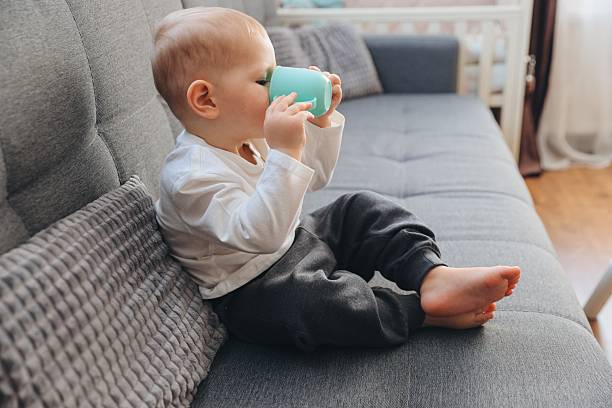
For new parents and grandparents with a brand-new fabric couch and a toddler who has just made contact with it, banana, juice, pasta sauce, marker, or worse.
Most toddler stains come out if you act in the first hour and use the right method for that specific stain, the wrong method is what sets them forever. Cold water only. Blot, never rub. Work outside-in. Below are the calm, specific steps for the 10 stains toddlers actually make.
Your toddler just dropped a banana, a juice cup, or a fistful of pasta sauce onto a couch that was delivered three weeks ago. You can feel your heart in your throat. Don’t worry, the next sixty seconds matter more than the next sixty minutes, and you’ve got this.
This is the guide we wish every new-couch owner had taped to the fridge.
First 60 Seconds, The Universal Moves
Lift toddler off the couch first, breathe, grab cold water + clean white cloths, blot (don’t rub), and work from the outside of the stain in. These five steps apply to every stain on the list.
Before you reach for anything in the laundry cupboard, do these five things in order. They apply to every stain on this list.
- Lift the toddler off the couch. Whatever’s on the cushion is fine, what’s on their hands and pants will keep spreading until they’re off the furniture.
- Take a breath. Sixty seconds of clear thinking beats two minutes of frantic scrubbing.
- Grab cold water and clean white cloths or paper towels. Always cold, never warm, never hot. White only, so no dye transfers into your fabric.
- Blot, don’t rub. Rubbing pushes the stain deeper into the fibres and breaks the fabric’s surface texture. Blotting lifts it out.
- Work from the outside of the stain in. This stops the edge spreading into a bigger ring as you clean.
That’s the universal playbook. Now the stain-specific moves.
The Toddler Stain Cheat Sheet
Each stain has a slightly different rule. Food, fruit drinks and tomato sauce, cold water and blot only. Vomit, baking soda first. Crayon and gum, harden with ice, then scrape. Blood, cold water only (heat sets it forever). Marker and red wine, call a pro fast.
Food (banana, mashed meal, avocado)
You’ve got two minutes before that banana sets. Scrape the solids off with a blunt knife or the back of a spoon, don’t push down, lift across. Blot with cold water and a clean white cloth, changing to a fresh patch of cloth each pass. If anything remains, use a fabric-safe spot cleaner (not dish soap, it leaves a residue that yellows). Air dry, don’t hit it with a hairdryer.
Apple juice, cordial, fruit drinks
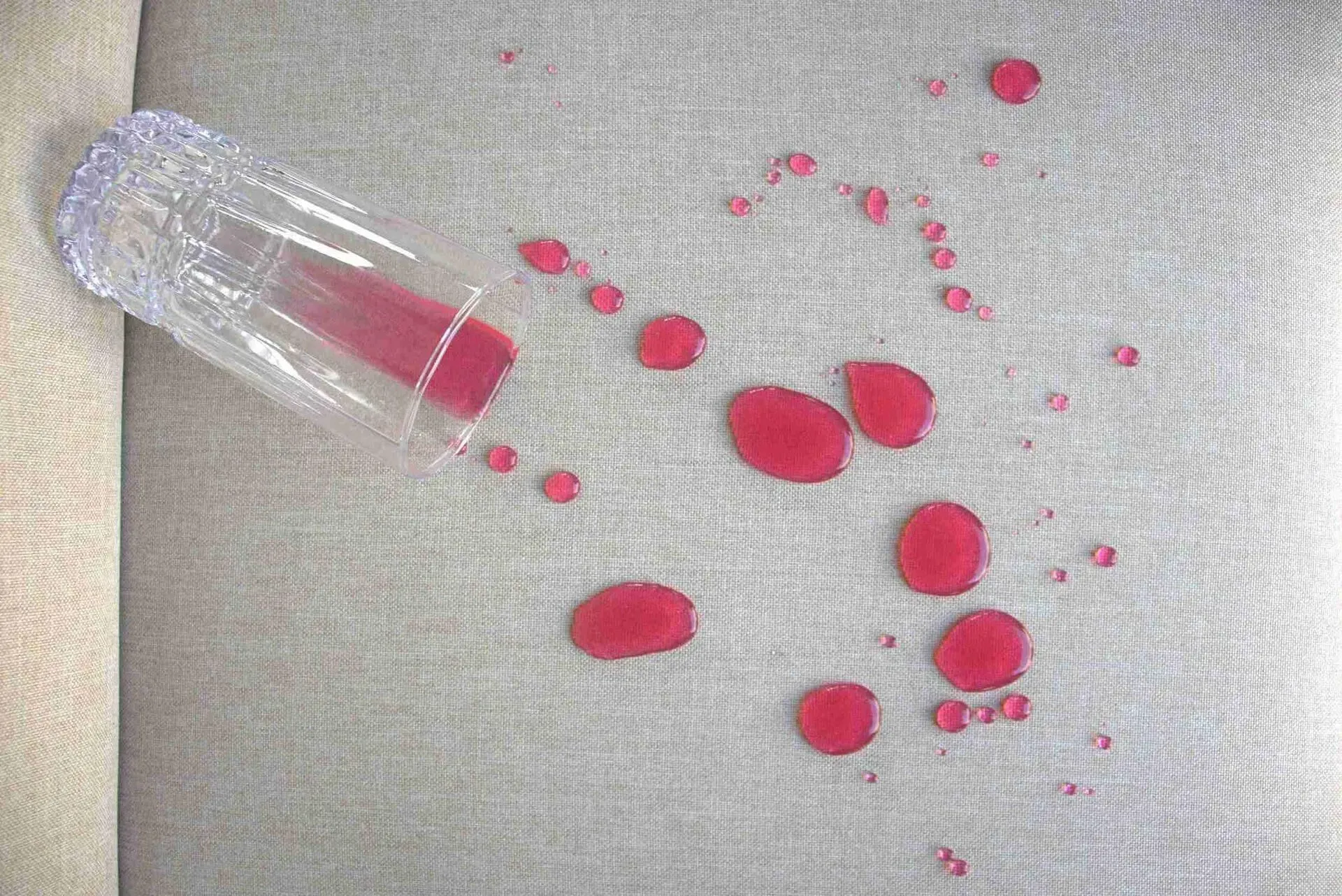
Cold water, immediately. Sugary drinks set fast and leave a sticky shadow even after the colour is gone. Blot, don’t pour. Use multiple light passes with a damp cloth rather than one heavy soak, and absolutely no heat. Heat caramelises the sugar into the fibres and turns a fixable spill into a permanent brown patch.
Tomato sauce or pasta sauce
Scrape every solid bit off first, sauce sitting on the surface is doing nothing, sauce pushed into fibres is doing damage. Cold water, dab gently. Never rub red food on light fabric; you’ll spread the pigment in a halo around the original spot. If colour remains after blotting, this is a pro call, tomato pigment is one of the hardest to fully lift without the right enzymatic cleaner.
Vomit
Scrape the solids straight into a bag, don’t try to rinse them off the couch first. Sprinkle baking soda generously over the wet patch to absorb moisture and neutralise the smell. Leave it ten to fifteen minutes, then vacuum it up. Blot with cold water. Open a window, ventilation matters as much as cleaning here, because the smell sits in the cushion fill and lingers if the area stays damp.
Milk or formula
Cold water within the first few minutes, then an enzyme-safe upholstery cleaner. Milk doesn’t look like much when it lands, but if you leave it, the protein sours inside the cushion and you’ll smell it for weeks. Blot thoroughly, then press a dry cloth in to lift moisture out of the foam. If the smell is still there after 24 hours, call a pro.
Crayon or wax
Don’t go in with water, you’ll smear the wax. Scrape with a blunt knife first. If it’s smeared in, harden it with an ice cube in a sandwich bag pressed against it for a minute, then scrape again. Once the bulk is off, a fabric-safe solvent spot cleaner will lift the colour residue. Test on a hidden spot first (under a cushion, on the back skirt) to make sure the fabric doesn’t react.
Marker pen or texta
Act fast. A fabric-safe alcohol-based cleaner, dabbed (not rubbed) with a white cloth, will lift most water-based textas if you catch them within the hour. Always test on a hidden area first, alcohol can pull dye out of some fabrics. If it’s permanent marker, stop after one gentle attempt and call a pro, DIY usually spreads it.
Kid’s water-based paint
Cold water, right now, before it dries. This is the easiest stain on the list if you catch it wet, water-based paint comes out of upholstery beautifully with cold water and a clean cloth. If it’s dried in, soften it with a damp cloth held over the spot for ten minutes, then blot. Don’t scrape dried paint off, you’ll break the fibres and leave a fuzzy patch where the colour used to be.
Blood (nose bleed, scrape, mouth knock)
Cold water only. Never warm or hot, heat cooks the protein into the fibres and locks the stain in permanently. Blot with cold water and a white cloth, changing patches as it lifts. For stubborn spots, a small amount of salt-water solution can help. If it’s fully dried in, don’t keep going, call a pro before you set it further.
Sticky stuff (lollipop, ice cream, chewing gum)
Don’t reach for water first. Press an ice cube in a sandwich bag against the sticky patch for a minute or two until it hardens. Then peel or scrape the solid off, most of the mess will come away in one piece. Only after the bulk is gone do you go in with a damp cloth to clean the residue. Wet cleaning on still-sticky goo just spreads it.
The 5 Things NOT To Do
No rubbing, no hot water, no Scotchgard on a wet stain, no baby wipes, no soaking-wet towels left to sit. These five mistakes turn fixable spills into permanent patches.
- Don’t rub. Rubbing breaks the fibre and pushes pigment deeper. Blot every time.
- Don’t use hot water. Heat sets protein stains (blood, milk, vomit) and caramelises sugar stains. Cold water only.
- Don’t spray fabric protector on a wet stain. Scotchgard and similar sprays lock the stain in. Protect a clean dry couch, not a fresh spill.
- Don’t use baby wipes. Baby wipes feel right but they’re not. They leave a chemical residue that attracts dirt for months, and the surfactants can shift the fabric dye.
- Don’t dump a wet towel on it and walk away. Moisture wicks down into the cushion fill, and you end up with mould and a deeper stain than you started with.
When DIY Isn’t Enough, Call A Pro Within 24 Hours
Red wine, ink, permanent marker, anything larger than your hand, anything already dried in, anything that’s soaked through to the cushion fill, or delicate fabrics (velvet, linen, viscose). 24 hours is the window before most stains settle in.
Some stains aren’t a DIY job, and trying twice usually makes them worse. Call a professional upholstery cleaner within 24 hours if:
- It’s red wine, ink, or permanent marker
- The stain is larger than your hand
- It’s already dried in before you saw it
- You’ve done one DIY pass and it didn’t lift
- Liquid has soaked through to the cushion fill (you can feel it when you press)
- The fabric is delicate, velvet, linen, viscose blends (these need different chemistry, see the Fine Fabric note below)
The 24-hour window matters. After that, most stains settle in and become a “lift what we can” job rather than a “remove it” job.
A Note On Delicate Fabrics, Velvet, Linen, Viscose
Fine fabrics aren’t standard upholstery. They need a different product. If your couch is velvet, linen, viscose blend or a fine-weave fabric, don’t use a standard spot cleaner. The chemistry that’s safe on a polyester weave can dull the pile on velvet or pull dye from linen.
For these fabrics, the Wundaguard Fine Fabric Spot Cleaner (250mL) is specifically formulated to lift stains without disturbing the fibre or pile. It’s the product we use in-house on every fine-fabric job.
If you’re not sure what your couch is made of, check the care tag (usually under a cushion). If in doubt, call us before you try anything.
If Your Couch Is Wundaguard-Protected
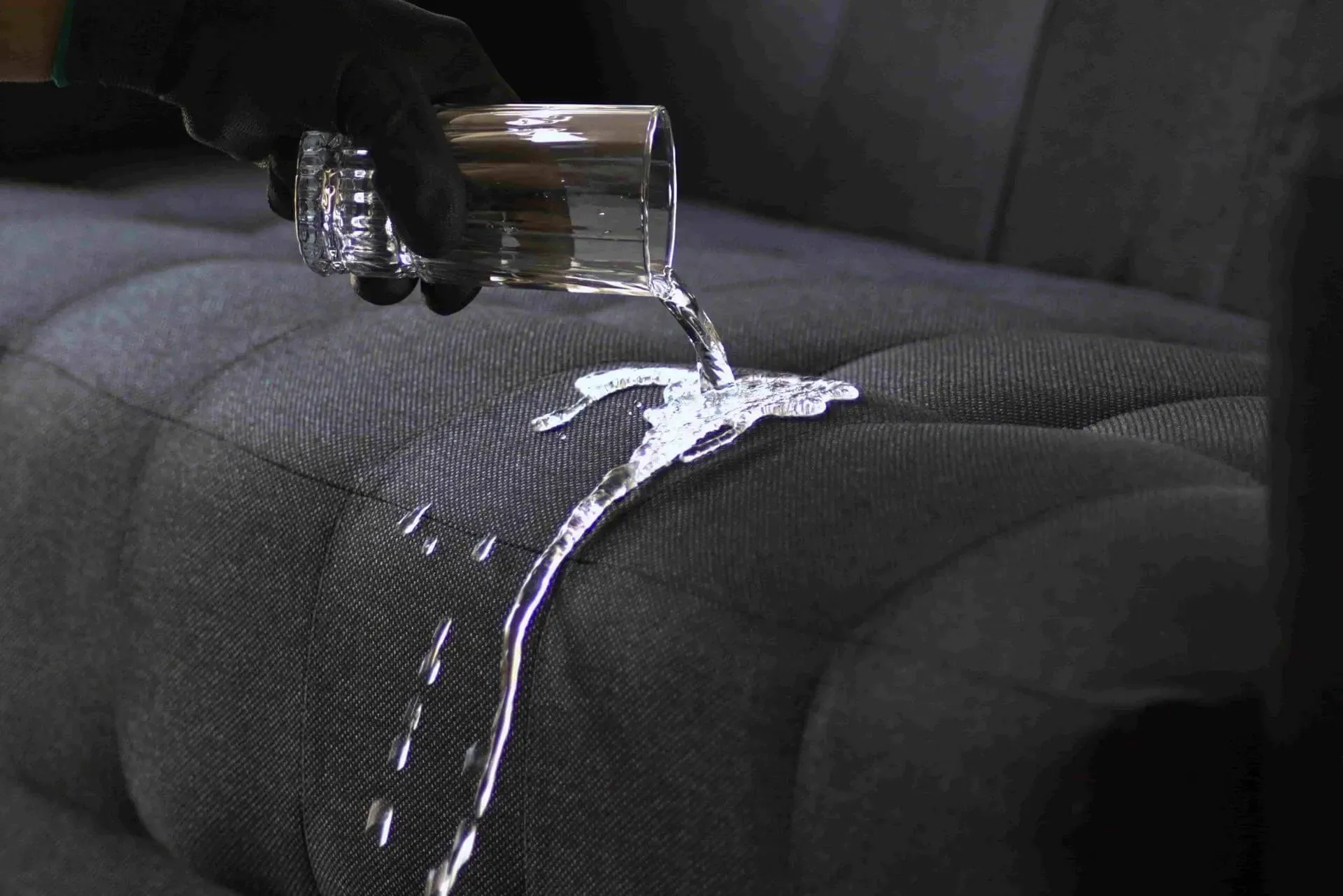
Here’s the quiet advantage: a Wundaguard-treated couch buys you time. The stain sits on top of the fibre instead of soaking in, so you’ve got several minutes to react instead of seconds. Most spills lift with just cold water and a cloth, no spot cleaner needed. Cleaning is easier, results are better, and the fabric holds its look for years longer.
To keep your protection (and your warranty) live, have your couch professionally cleaned every 18 months. That maintenance clean is also when the protective treatment gets checked and topped up where it’s worn.
For New-Couch Owners, What To Keep In The Cupboard
If you bought your couch from Lounges Plus, Known For Lounges, or Strictly Comfort, there’s a good chance Wundaguard fabric protection was offered to you at the point of sale, and a care guide came home with the couch. Dig it out of the paperwork drawer. It tells you exactly what your fabric can and can’t handle.
For everyday toddler moments, keep the right spot cleaner in the cupboard:
- Standard fabric couch: Wundaguard Fabric Spot Cleaner ($39), available at Strictly Comfort and the Wundaguard online store.
- Velvet / linen / viscose / fine-weave fabric: Wundaguard Fine Fabric Spot Cleaner (250mL), different chemistry, won’t disturb the pile or pull dye. Wundaguard online store.
Same chemistry the professional cleaners use, in bottles sized for home. Safe on Wundaguard-protected fabric without voiding warranty.
FAQ
My toddler stained the couch days ago, is it too late?
Not necessarily, but it’s a pro job now. Dried-in stains can still come out, but the DIY methods on this page are for fresh spills. Trying to scrub a set stain usually damages the fabric. Call us, we’ll tell you honestly whether it’ll lift.
Can I use baby wipes, they’re for babies, surely they’re safe?
Safe for skin, not safe for upholstery. Baby wipes leave a surfactant residue on fabric that attracts dust and dirt for weeks afterwards. You’ll end up with a clean spot that turns grey within a month.
Can I just hire a steam cleaner?
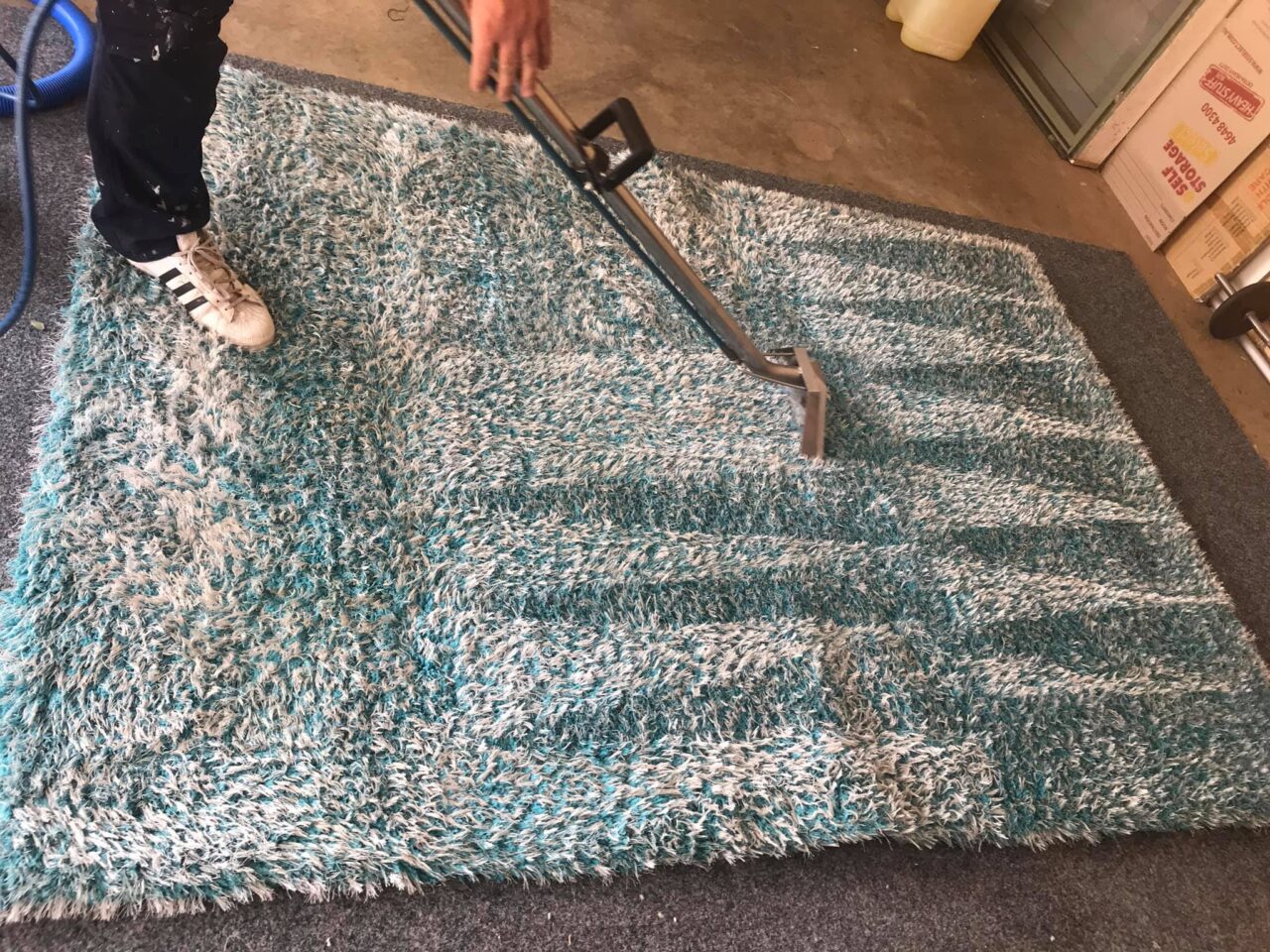
For most upholstery, no. Steam can damage the fabric backing, distort the cushion shape, and on protein stains (milk, blood, vomit) heat sets the stain permanently. Cold-water blotting is almost always the right home method.
Does my couch’s fabric protection cover stains like this?
Fabric protection makes stains far easier to remove and gives you more time to react, it doesn’t make the couch stain-proof. If you’ve kept up the 18-monthly professional cleans, your warranty is intact and we can usually fix anything DIY couldn’t.
My couch is velvet, can I use the standard spot cleaner?
No. Velvet, linen, viscose and fine-weave fabrics need the Wundaguard Fine Fabric Spot Cleaner, not the standard $39 one. Different chemistry. Using the wrong one can dull velvet pile or pull dye from linen.
Will the stain come back if it dried?
Sometimes, it’s called wicking. Moisture pulls the stain back up to the surface as the cushion dries. If you see a faint ring reappear a day later, that means the stain is still in the cushion fill, not just the cover. That’s a pro call.
When This Guide Isn’t For You
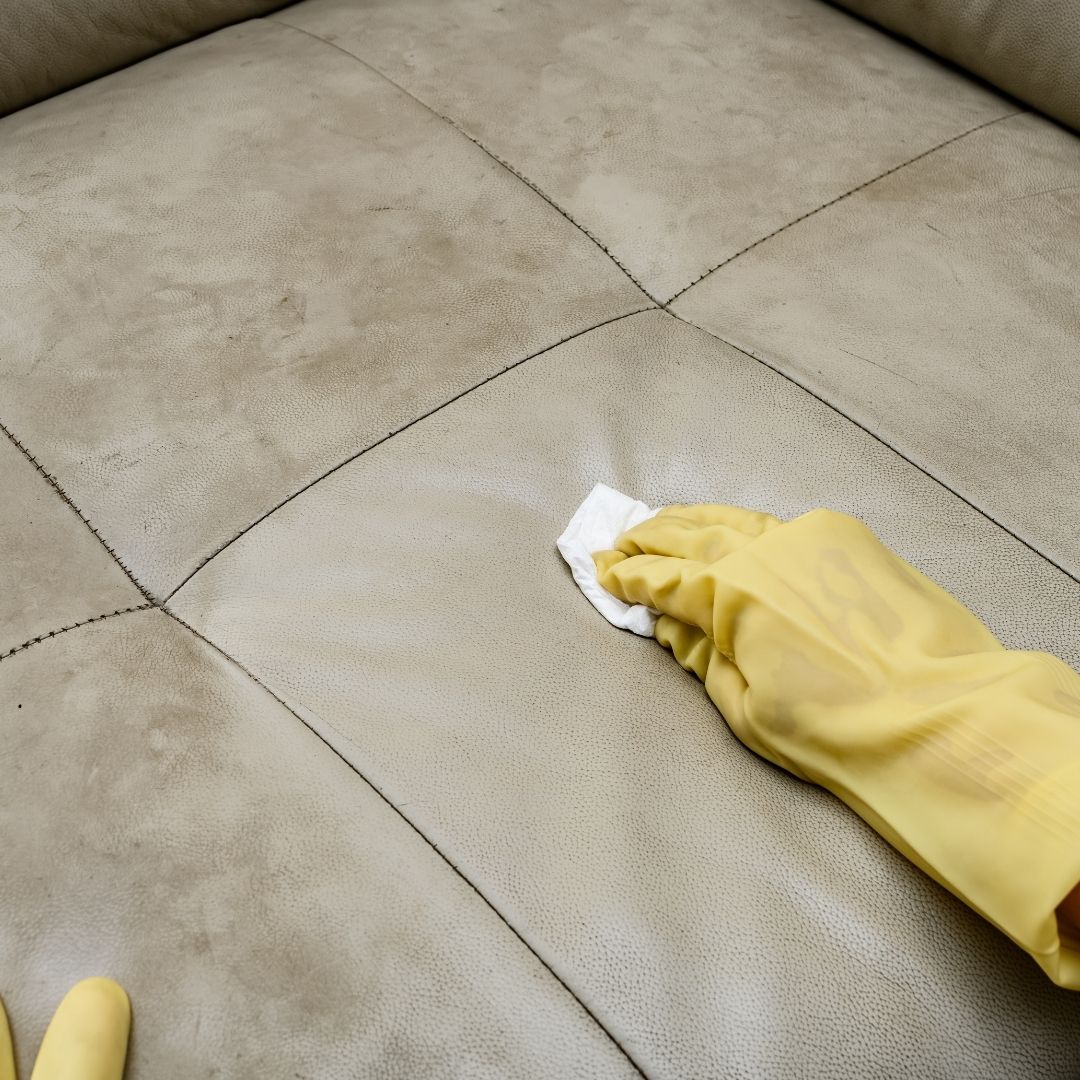
- You have leather, vinyl or hard-surface furniture. Different category, call us for advice, but this guide is fabric only.
- You want to use supermarket carpet shampoos or “miracle” sprays on a Wundaguard-protected lounge. They void the warranty, we’d rather you stop.
- You’re after a one-off discount upholstery clean with no aftercare. We’re trusted by Freedom Furniture, Lounges Plus and Strictly Comfort, not the cheapest in the phone book.
Need Help With A Stain You Can’t Lift?
Wundaguard, Sydney upholstery cleaning and national fabric protection. Forty years caring for Australian couches, since 1985.
Upholstery cleaning from $33/seat
Phone: 1300 360 824
Online: contact form
If you don’t have fabric protection on your couch yet, this is exactly the moment to think about it, before the next banana. Get in touch and we’ll talk you through what your fabric needs.
Our Services
Get A Free Quote
Contact us today for a free, no-obligation quote on your fabric and leather protection needs.