

A hired extraction machine and a professional upholstery clean are not the same job done at different price points. They are different processes. The machine you wheel out of the supermarket is built to push water into a surface and pull most of it back. That is a reasonable description of what it does, and it is also the reason so many lounges come out of a DIY clean looking worse a week later than they did before.
Wundaguard has been cleaning and protecting furniture since 1983. Here is what actually differs, in the order it matters.

Key takeaways
- The method is chosen from the fabric, not from the machine that happens to be available.
- Over wetting is what causes wicking, odour and tannin bleed, and it shows up days later.
- Hire machines have no way to control drying, and drying is half the job.
- Your lounge has a cleaning code on its label. It decides what is safe.
What does a professional actually do differently?
The first difference happens before anything gets wet. A professional identifies the fibre and reads the manufacturer’s cleaning code, then picks a method to suit it. A hire machine offers one method, and you use it on whatever you own.
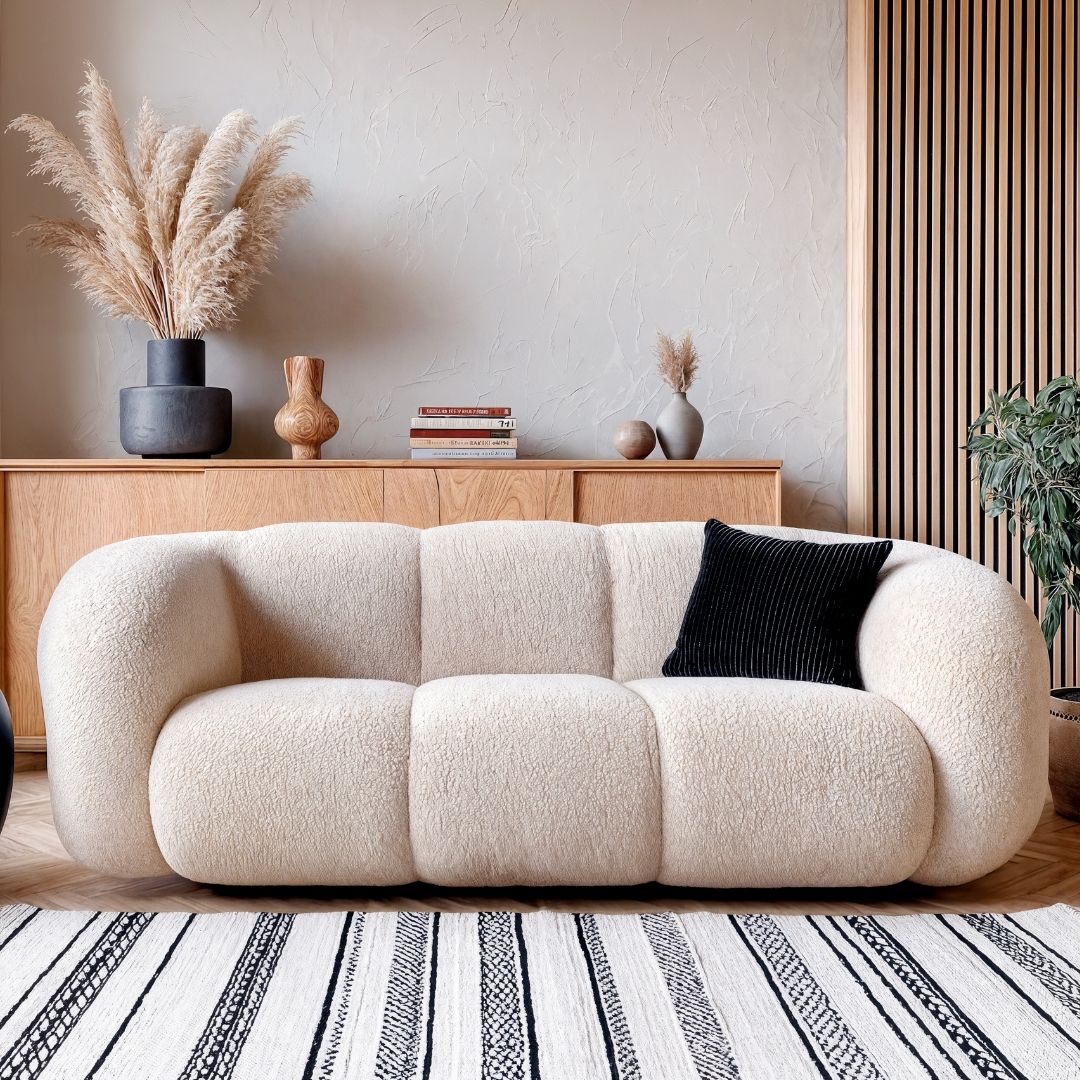
That matters because upholstery fibres behave very differently in water. Viscose and rayon lose strength when wet and can distort permanently. Velvet and boucle carry a pile or a loop that water pressure flattens. Linen shrinks and can watermark. Wool felts if it is agitated. None of that is exotic; it is most of what sits in an Australian lounge room.
We have written separately about what the W, S, W-S and X tag on your lounge actually means, and it is worth two minutes before you clean anything. An X coded fabric is not to be wet cleaned at all. A hire machine has no way of knowing that, and neither does the person pushing it.
Why does over wetting cause so much of the damage?
Because the water goes further into the furniture than the machine can pull it back out. Upholstery is not a flat surface. It is fabric over foam over webbing over a frame, and a hire machine’s suction is designed for a surface, not for a structure.
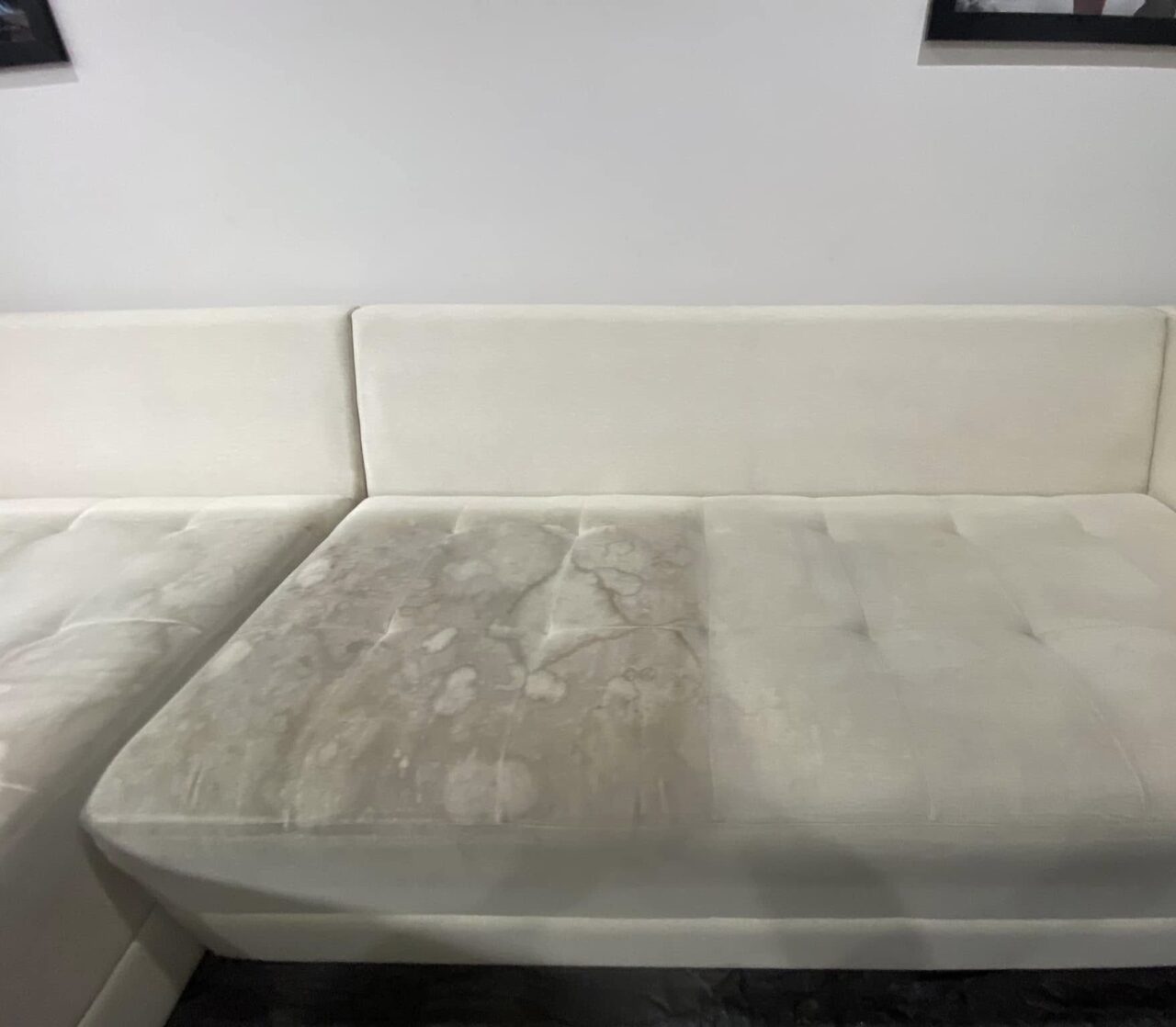
What happens next is predictable. Moisture sits in the foam. It carries the dissolved soil back up to the surface as it dries, which is why a stain you removed on Sunday reappears as a brown ring on Wednesday. That is wicking.
If the foam stays damp long enough, you get odour. On a light coloured frame you can also get timber tannins bleeding up into the fabric at the base, which is very difficult to reverse.
The rule of thumb
A professional clean should leave the lounge damp to the touch and dry within hours, not soaked and dry by tomorrow. If you can press a towel into a cushion after cleaning and lift visible water out of it, too much went in.

Is drying really part of the job?
Yes, and it is the part a hire machine cannot help you with at all. Controlling how fast a piece dries is what stops wicking, watermarking and odour.
On site that means managing how much moisture goes in to begin with, extracting properly, and using airflow to finish. In a humid Sydney week, a lounge that would dry in three hours in September can take most of a day in February. The method has to change with the weather, which is something we cover in should sofas be steam cleaned or dry cleaned.
Dry cleaning solvent methods exist precisely for fabrics and conditions where water is the wrong answer. A hire machine does not offer that choice.
What about the cleaning solution?
Supermarket hire machines come with a general purpose solution designed to be safe across a broad range of surfaces. Safe across a broad range means not especially effective on any one of them, and it usually means a residue.
Residue is the quiet problem. Detergent left in a fibre is sticky, and sticky fibre attracts soil faster than clean fibre does. That is why a DIY cleaned lounge often looks acceptable for a fortnight and then dirties much faster than it used to. The fabric hasn’t worn out. It has been left tacky.
There is also the question of what the solution does to any protection already on the fabric. If your lounge was treated when it was delivered, an aggressive DIY clean can strip it, and you lose the thing that was making spills recoverable in the first place.
When is a DIY approach genuinely fine?
For a fresh spill, DIY is not just fine, it is better, because speed matters more than technique in the first minute. Blot, don’t rub, work from the outside in, and use as little liquid as you can.
Where DIY stops being sensible is a whole piece clean, an older set in stain, anything on a fabric you cannot identify, and anything on leather. We cover the spill scenario properly in why DIY spot cleaning often makes stains worse.
What does professional upholstery cleaning cost?
Wundaguard prices upholstery per seat, and leather couch cleaning starts from $66 per seat. Fabric protection is quoted per seat as well. What moves the number is the fibre, the size of the piece, the condition it is in and whether protection is applied afterwards.
The comparison worth making is not the clean against the hire machine. It is the clean against the piece. A lounge is one of the more expensive things in the room, and the cost of getting the method wrong once is usually a great deal more than the cost of having it done properly.
You can see what is involved on the sofa cleaning page, or call Wundaguard on 1300 360 824 for a quote on your own furniture.
Frequently Asked Questions
Can I use a hire machine on my couch if I am careful?
On a W coded, colourfast fabric with a light soil load, carefully and sparingly, you may get an acceptable result. On anything coded S or X, on velvet, boucle, viscose, linen or wool, and on any leather, the risk of permanent damage is real.
Why did my stain come back after cleaning?
That is wicking. Moisture went deeper into the foam than it was pulled back out, and as it dried it carried dissolved soil back up to the surface. It is the classic sign of over wetting rather than a failed stain removal.
How long should my lounge take to dry?
Hours rather than days. Exactly how long depends on the fabric, the method chosen and the humidity on the day, which is why the same lounge can dry in three hours in September and take most of a day in February. If a piece is still damp the following morning, too much water went in and wicking is likely.
Does professional cleaning remove fabric protection?
A correct professional clean is chosen to work with the protection already on the fabric, and protection can be reapplied afterwards if it has worn back. An aggressive DIY clean with a general purpose solution is far more likely to strip it, which quietly removes the thing that was making spills recoverable in the first place.
Do you clean rugs as well as lounges?
Yes. Rug cleaning is a separate process again, because the fibre decides whether a rug is steam cleaned or dry cleaned, and a rug is handled off the floor rather than in place. You can read how that decision is made in area rug cleaning depends on the fibre.
Our Services
Get A Free Quote
Contact us today for a free, no-obligation quote on your fabric and leather protection needs.