
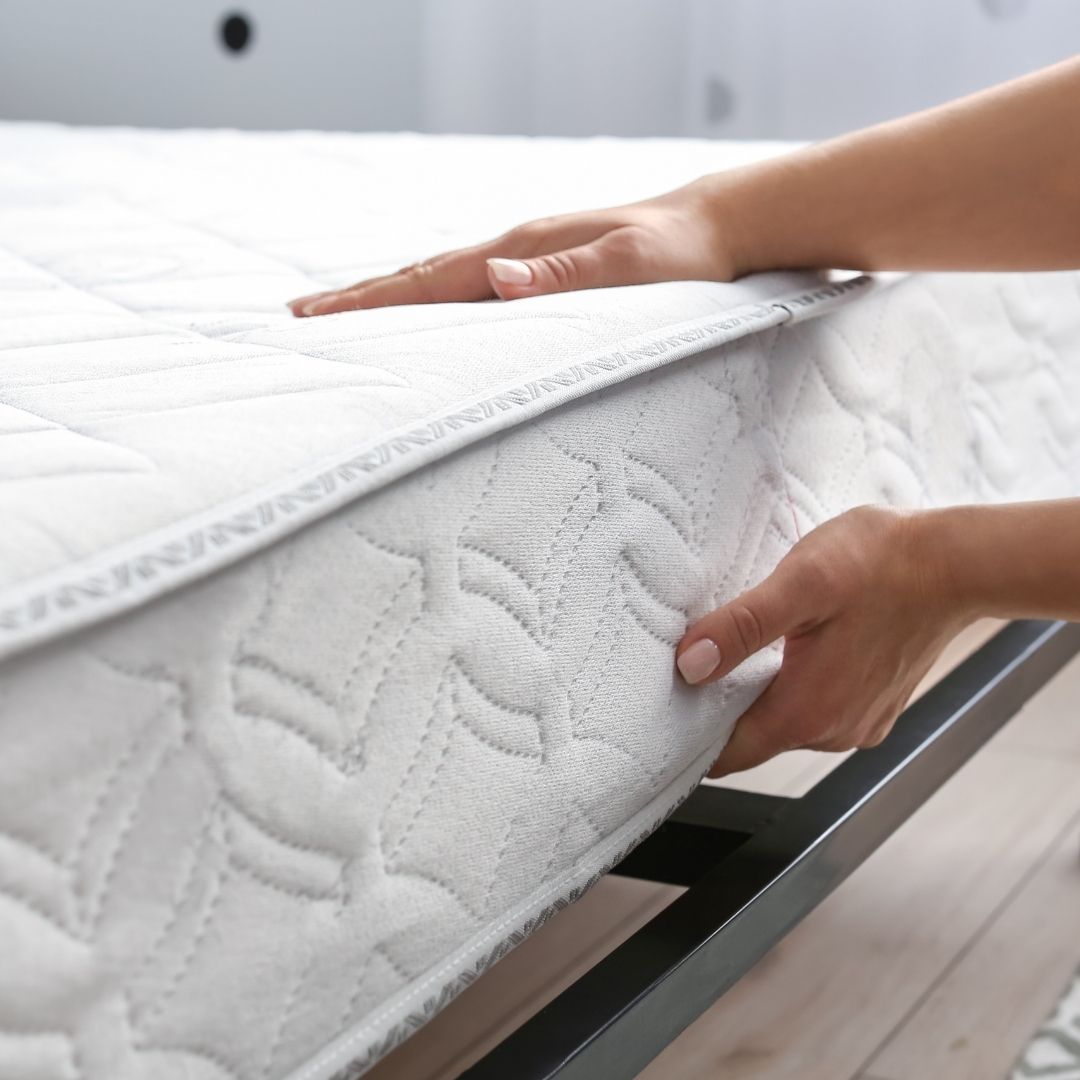
Most people never clean the mattress they sleep on until something spills on it. We clean mattresses across Sydney, the Macarthur region and south west Sydney, and the ones we get called out to usually look fine from the outside. Here’s what a professional mattress clean removes, what happens during the visit, and what you can do between cleans.
The short answer
- A professional mattress cleaning visit lifts loose dust with a high filtration vacuum, pre-treats stains and odours, deep cleans by steam extraction or dry cleaning depending on the mattress type, then applies a dust mite inhibitor and deodorises.
- Wundaguard recommends a professional mattress clean every 6 to 12 months for most households, and more often where someone has allergies, or there are children or pets in the house.
- Mattress cleaning starts at $99 per mattress.
- Sweat, body oils, skin flakes and old spills are what we’re actually removing. Skin flakes in household dust are also what house dust mites feed on, according to Asthma Australia.
What A Professional Mattress Clean Removes
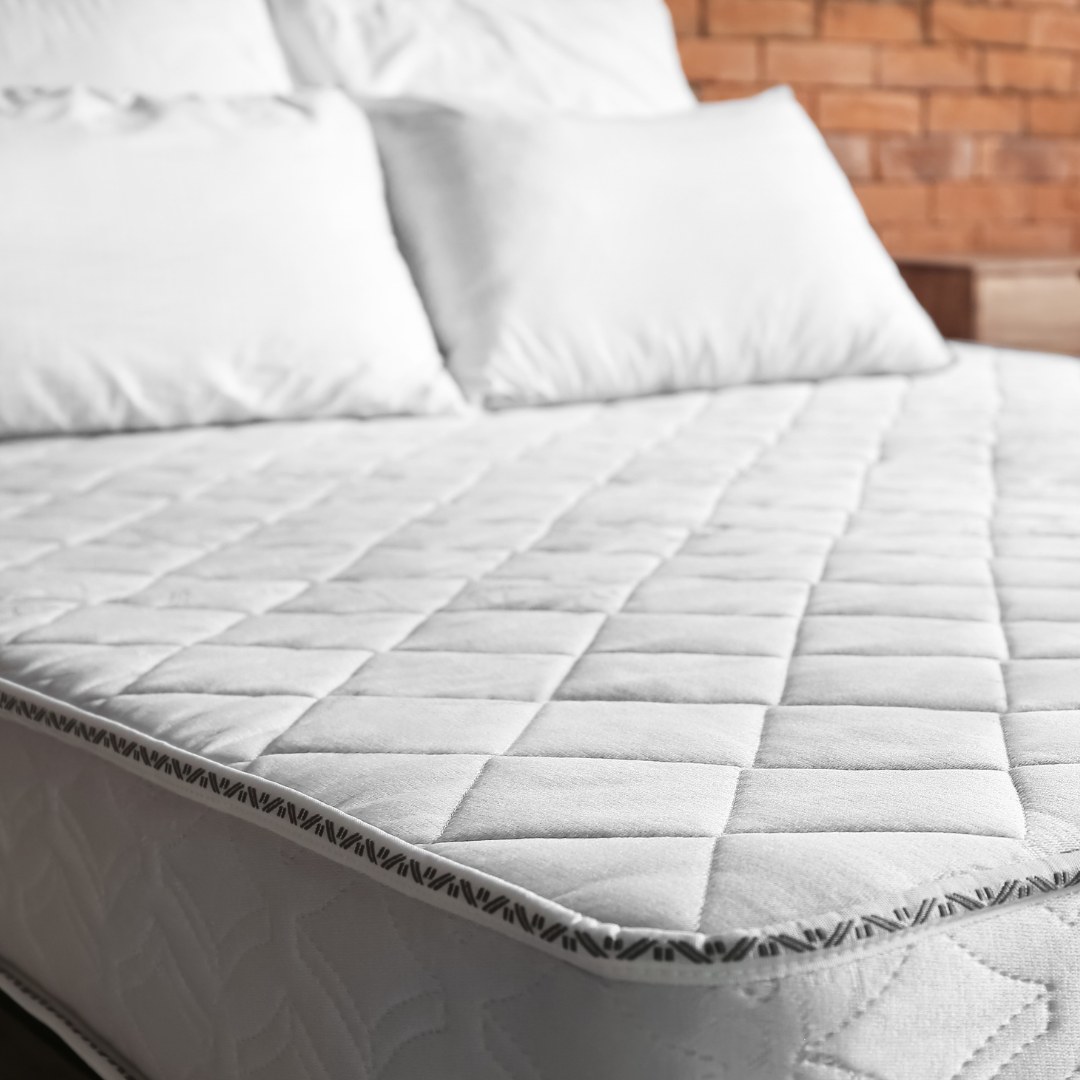
Sweat, body oils, skin flakes and whatever has been spilled on it. You spend roughly a third of your life on a mattress, and all of that soaks past the cover into the top layers where a household vacuum can’t reach it.
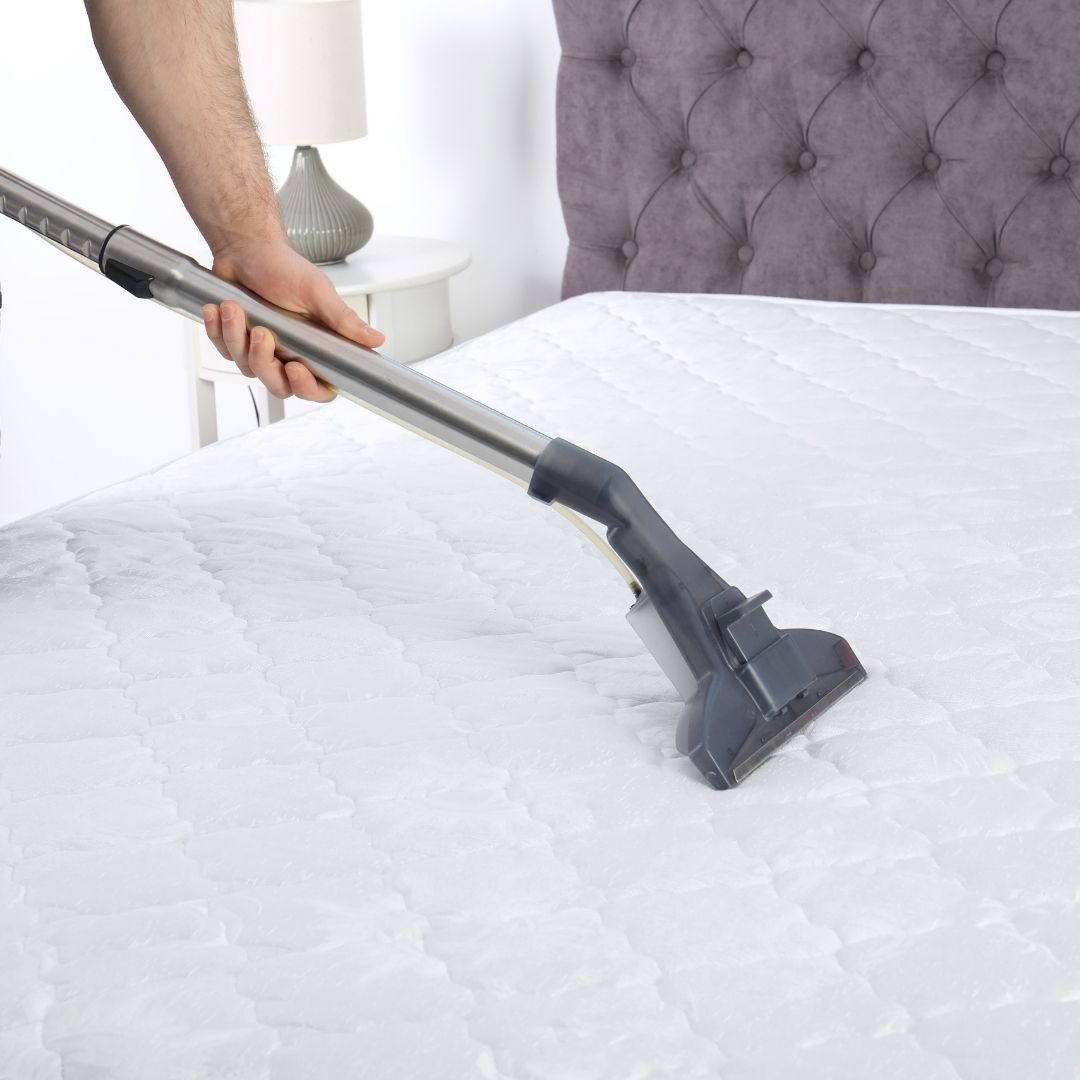
A professional clean works on those top layers directly. The high filtration vacuum comes first and pulls out loose dust and debris. Stains and odours are then pre-treated with targeted solutions before any moisture goes near the mattress, which is the step that decides how much of an old stain will actually lift.
Can A Mattress Be Professionally Cleaned?
Yes, and it’s a normal booking for us rather than a specialist one. Wundaguard has been cleaning and protecting furniture in Sydney since 1983, and mattress cleaning is one of the services we run today.
A mattress doesn’t come back looking like the day it was delivered. Stains that have been sitting for years may not fully lift, and we’ll say so when we look at the mattress rather than after we’ve finished.
The Mattress Cleaning Process, From Inspection To Deodorising
Six steps, in this order, every time:
- Inspection. We find the stains, the odours and the problem areas before anything is applied.
- Pre-vacuum. A high filtration vacuum removes loose dust and debris from the surface and the seams.
- Pre-treatment. Stubborn stains and odours get a targeted solution and time to work.
- Deep clean. Either steam extraction or dry cleaning. Which one depends on the mattress type, not on preference.
- Sanitisation. A dust mite inhibitor is applied across the sleeping surface.
- Deodorisation. A fresh finish so the mattress doesn’t smell like the clean.
Drying time depends on which of the two methods your mattress needs, so ask about it when you book. Guessing at a figure over the phone, before anyone has seen the mattress, isn’t much use to you.
Dust Mites In Your Mattress, And What The Clean Does About Them
House dust mites get their name from where they live, which is household dust, and Asthma Australia says the skin flakes in that dust are their main food. They’re under half a millimetre long, so you won’t see them. Asthma Australia also notes it’s the protein in dust mite droppings that people react to, and that anyone allergic to them should try to reduce their exposure.
That’s the reason the vacuum step comes before anything else. Take out the skin flakes and loose dust and you’ve taken out a lot of what they feed on. The dust mite inhibitor goes on afterwards, at the sanitisation step, across the whole sleeping surface.
We’re furniture cleaners, not allergy specialists, so if someone in the house has asthma or a diagnosed dust mite allergy, talk to your GP about what else helps. Our part of it is the dust, the skin flakes and the spills that come out of the mattress.
Can You Use An Upholstery Cleaner On A Mattress?
It’s one of the questions we get asked most, and the answer depends on two things: what the cover fabric is, and how much moisture the product leaves behind. A mattress can’t be taken outside to dry properly, so anything that soaks in and stays wet is a problem you’ve made worse.
Check the care tag first. If it carries one of the W, S, W-S or X cleaning codes, that code decides what you can use. An X code means vacuum only at home, no water and no solvent, and any liquid cleaning has to be done professionally. If you can’t find a tag, spot test a hidden section, use as little product as you can, and don’t scrub.
How To Sanitise A Mattress Between Professional Cleans
Five habits do most of the work, and none of them take long:
- Vacuum the mattress with a HEPA filter attachment, seams included.
- Deal with spills straight away. A fresh spill is a spot clean, a dried one is a stain.
- Use a mattress protector. It’s the one thing on this list you have to buy, and it stops spills reaching the mattress at all.
- Air the room. Trapped humidity is what causes the musty smell people blame on the mattress.
- Book a professional clean every 6 to 12 months, sooner if someone in the house has allergies.
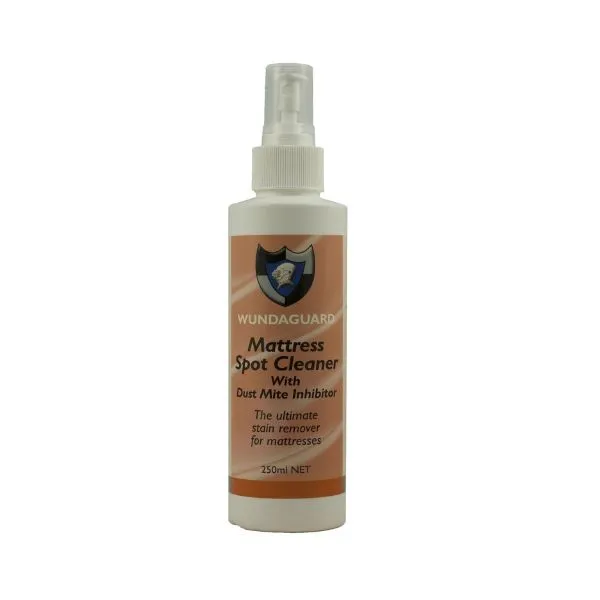
For spot treatment between cleans we make the Wundaguard Mattress Cleaner, a water based, low odour spray with an inbuilt dust mite inhibitor. It’s built for spills and odours as they happen. It won’t do what a deep clean does, so use it on the marks and book the mattress in when it’s due.
Mattress Cleaning For Homes, Hotels And Healthcare
Accommodation providers and property managers across Sydney use us as well as households. On beds that change hands often, a clean booked on a cycle means stains and odours don’t get the chance to set in between guests or residents. It’s the same process and the same products we use in a house, one room or forty, across Sydney, the Macarthur region and south west Sydney.

Protecting A New Mattress From Day One
On a new mattress, the barrier is the smart spend. A protector, breathable bedding and quick spot cleaning stop spills and moisture soaking in, which keeps the mattress closer to new for longer.
Starting with professional stain protection changes what every future clean has to do. A protected mattress is a maintenance clean rather than a restoration, because the spill sits on the barrier instead of soaking into the fibres. It’s the same reason furniture retailers have been sending us their customers for 40 years.
Mattress Cleaning Questions We Get Asked
How often should a mattress be professionally cleaned?
Every 6 to 12 months for most households, and more often where someone has allergies, or there are children or pets on the bed. We’ve written more on how often you should clean your mattress and what changes that timing.
How much does mattress cleaning cost in Sydney?
Mattress cleaning starts at $99 per mattress. Confirm the figure for your mattress with us when you book. Current pricing sits on our mattress cleaning page.
Can you steam clean a mattress?
Steam extraction is one of the two methods we use. The other is dry cleaning. Which one your mattress gets is decided by the mattress type, and we make that call at the inspection step rather than over the phone.
Can you remove urine, sweat or wine stains from a mattress?
We treat all three with targeted stain treatments and a deep clean. Some older stains won’t fully lift. We go for the best result the mattress can take without damage, and you’ll hear at the inspection what’s realistic for that stain.
How long does a mattress take to dry after cleaning?
It depends on whether the mattress is steam extracted or dry cleaned, and we don’t publish a figure because the two methods aren’t the same. Ask when you book and you’ll get the timing for your mattress before anyone arrives.
Booking A Mattress Clean In Sydney
If you’re not sure whether the mark on your mattress is worth a visit, send us a photo or give us a ring. We really don’t mind talking you through a spot clean you can do yourself. Greg and the team have been doing this across Sydney since 1983, and a clean mattress is a cheaper problem than a replacement one.
What Others Are Reading:

Our Services
Get A Free Quote
Contact us today for a free, no-obligation quote on your fabric and leather protection needs.