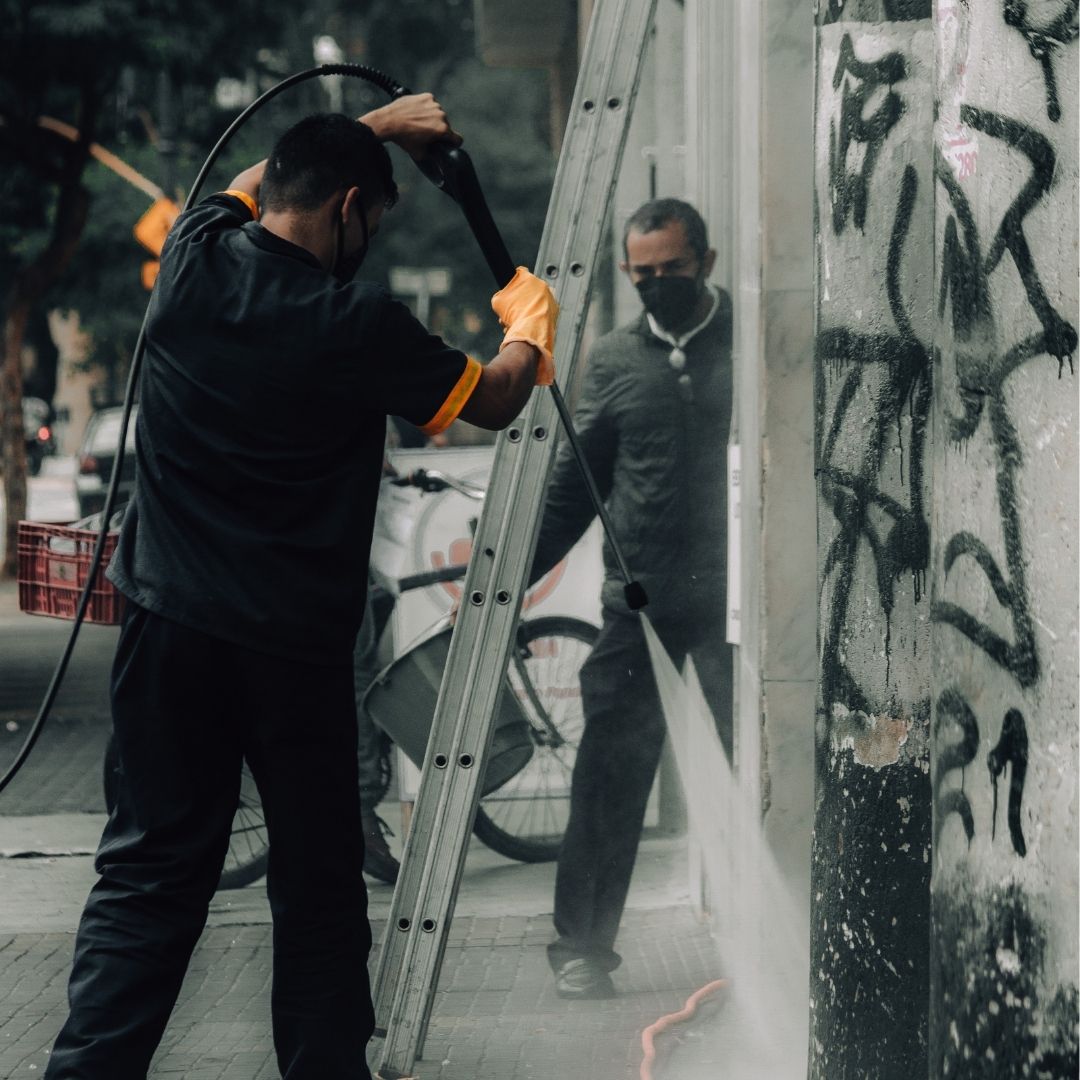
A tag appears on your fence, shopfront or boundary wall overnight, and the instinct is to get rid of it fast, before customers or neighbours see it. In Sydney, that usually means a trip to the hardware store for a pressure washer or a tin of thinners. Neither one is built for the surface underneath the paint, and that is where most graffiti jobs go wrong.
Short answer: the tools people reach for first, pressure washers, thinners and wire brushes, are built to strip material, not lift paint selectively. On brick, render, stone and painted finishes, that damages the surface underneath rather than fixing it.
Here’s why DIY removal often leaves a worse mark than the graffiti did, and what actually works instead.
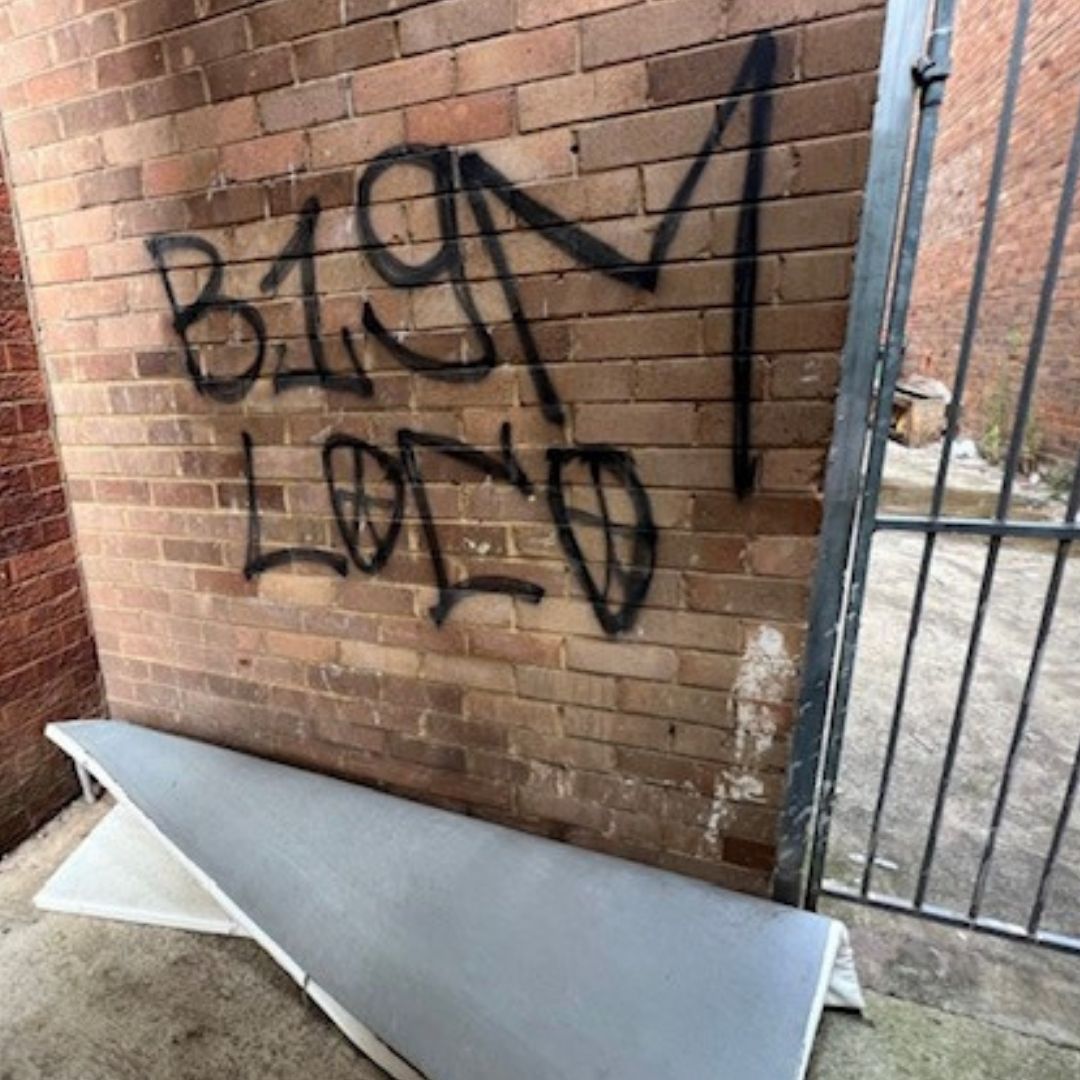
Why DIY Graffiti Removal Often Backfires
Pressure Washing
A pressure washer set high enough to shift spray paint is also high enough to blast mortar out of brick joints, drive water into render, and etch soft stone. On non-porous surfaces like glass or powder-coated metal it can work well. On porous surfaces, brick, render and concrete, which cover most Sydney fences and shopfronts, it usually pushes the pigment deeper instead of lifting it out.
Thinners and Solvents
Mineral turps, acetone and cheap thinners will often lift the paint, along with whatever coating sits underneath it. Render, exterior paint and some stone sealants can discolour, soften or strip clean off, leaving a patch that is a different colour and sheen to the rest of the wall. That patch becomes the permanent mark, not the tag.
Scrubbing and Wire Brushes
Aggressive scrubbing etches concrete and soft stone and burnishes brick, so even once the paint is gone, light hits that patch differently. Tradespeople call it shadowing, and once it’s there it doesn’t clean out, only cover up.
Painting Over It
Painting over graffiti with a close-but-not-quite colour match hides the tag for a few weeks, until UV fades the patch at a different rate to the surrounding wall. What’s left is a visible rectangle where the tag used to be, and now the job is a full repaint instead of a clean removal.
What Actually Removes Graffiti Without Damage
Short answer: match the method to the surface, test on a hidden patch first, and never use full pressure on a porous material.
At Wundaguard we assess the surface before we touch it. Non-porous surfaces like glass and powder-coated metal can usually take a stronger solvent and a squeegee finish. Porous surfaces such as brick, render and stone need a controlled low-pressure method with a solvent matched to the paint type, applied and lifted rather than scrubbed in. Signage and painted finishes need the gentlest approach of all, because the finish itself is often only a few microns thick.
When to Call a Professional Instead of Reaching for a Pressure Washer
If the tag is on a painted, rendered or stone surface, or it’s been there more than a day or two and the paint has started to cure, DIY removal carries a real risk of making the mark permanent. We get called out plenty of times to fix a failed DIY attempt rather than the original graffiti, and that second job is almost always more expensive than the first one would have been. Professional graffiti removal from Wundaguard starts from $150, and includes an assessment of the surface before any product touches it.
We Work With Councils, Not Just Homeowners
Wundaguard has spent 40 years removing graffiti and protecting surfaces across Sydney, and a large part of that work is with local councils, government agencies and commercial property managers who deal with repeat tagging on public and commercial sites. Repeat targets, a fence, underpass or shopfront that gets hit more than once, are also where a protective treatment earns its keep. It doesn’t stop graffiti happening, but it makes the next removal faster and gentler on the surface underneath.
Frequently Asked Questions
Can I remove graffiti myself?
You can try, but pressure washers, thinners and wire brushes often damage the surface underneath before they lift the paint. On brick, render and stone in particular, DIY removal risks etching, staining or stripping the finish, which becomes a permanent mark of its own. For anything beyond glass or smooth non-porous surfaces, it’s safer to call a professional first.
How much does graffiti removal cost in Sydney?
Professional graffiti removal from Wundaguard starts from $150, depending on the surface, the size of the tag and how long the paint has had to cure. Porous surfaces like brick and render usually take longer to treat safely than glass or metal. Call us for a straight quote on your specific surface.
How quickly should graffiti be removed?
As soon as you reasonably can. Fresh paint lifts far more easily than paint that’s had days or weeks to cure into a porous surface like brick, render or stone. Waiting also raises the chance of repeat tagging, since an unremoved tag often attracts more.
Does pressure washing damage brick or render?
Yes, if the pressure is high enough to shift spray paint, it’s usually high enough to blast mortar out of brick joints or drive water into render. Porous surfaces need a lower-pressure, solvent-assisted method matched to the paint type, not raw water pressure. Non-porous surfaces like glass and powder-coated metal handle pressure washing far better.
Do you remove graffiti for councils and businesses, not just homes?
Yes. Wundaguard works with local councils, government agencies and commercial property managers across Sydney on one-off and repeat graffiti removal, alongside residential jobs. We also treat surfaces that get tagged repeatedly, to make the next removal faster and gentler on the material underneath.
What surfaces can graffiti be removed from?
We remove graffiti from brick, concrete, glass, stone, signage and painted finishes, matching the method to the surface each time. Porous materials need a gentler, more controlled approach than non-porous ones like glass or metal. If you’re not sure what your surface can handle, call us before trying anything yourself.
The Last Word
Get to a tag early, match the method to the surface, and it comes off clean. Get the method wrong and the wall carries that mark longer than the graffiti would have. Call us on 1300 360 824 before you reach for the pressure washer.
What Others Are Reading:

Our Services
Get A Free Quote
Contact us today for a free, no-obligation quote on your fabric and leather protection needs.